Code3 is a digital advertising agency. I ran its coaching sprint on an “I do, we do, you do” model, and within a quarter, in the client’s words, teams across the business were building and maintaining their own AI-powered tools.
average adoption within each department, measured by weekly activity with the Claude Skills, Slack bots and automations
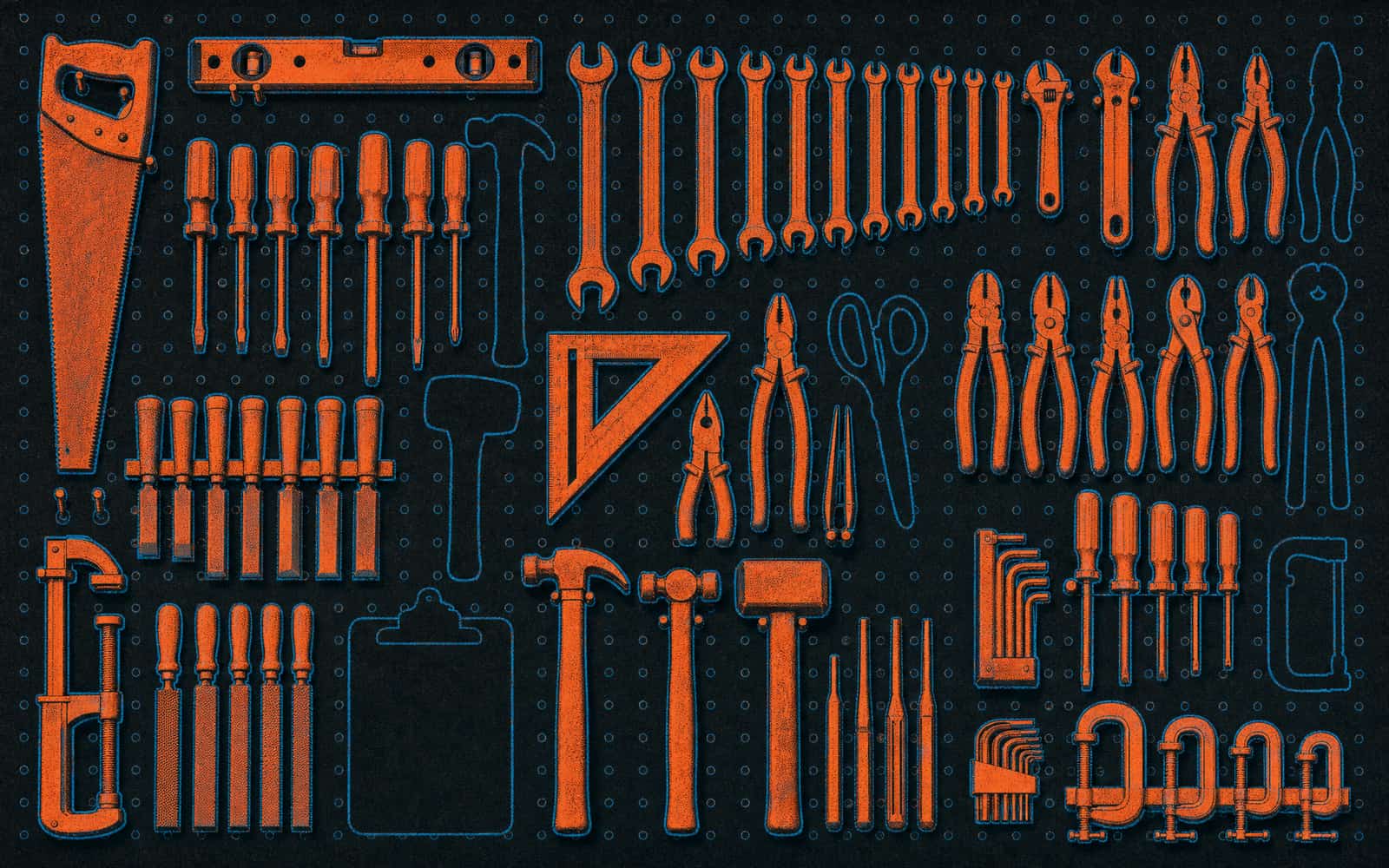
Pl. 1 — The tool wallIllustration
01 /In the client’s words
“Within a quarter we had teams across our business building and maintaining their own AI-powered tools.”
“Rasheed worked closely with my team to determine where AI deployment could help us both short-term and long-term. He helped migrate our organization to Claude, build specialized Skill packages, and integrate those skills with Slack and Asana. Within a quarter we had teams across our business building and maintaining their own AI-powered tools. Rasheed helped put us on a path to continue building independently, and months later we are still developing new ways to implement AI.”
Jack GilbertDirector of Performance & Analytics, Code3
02 /Where it started
Where could AI help, short-term and long-term?
Code3 is a 140-person digital advertising agency. Its teams worked in ChatGPT, with Custom GPTs of their own, and the work ahead included moving the organization to Claude.
Its CFO sponsored a 20-hour coaching sprint. Jack Gilbert, Director of Performance & Analytics, gives the brief in his own words: to “determine where AI deployment could help us both short-term and long-term.”
Outlines, before the toolsIllustration
03 /The method
I do, we do, you do.
The sprint was contracted as coaching, and every piece of it ran on one model. I do it while the team watches. We do it together. They do it, and keep doing it, without me. The point of the work was the hand-off.
Grouped by who held the tool, not by date.
I do
We do
You do
Rasheed / The team. Who holds the tool, chapter by chapter. A diagram of the method, not data.
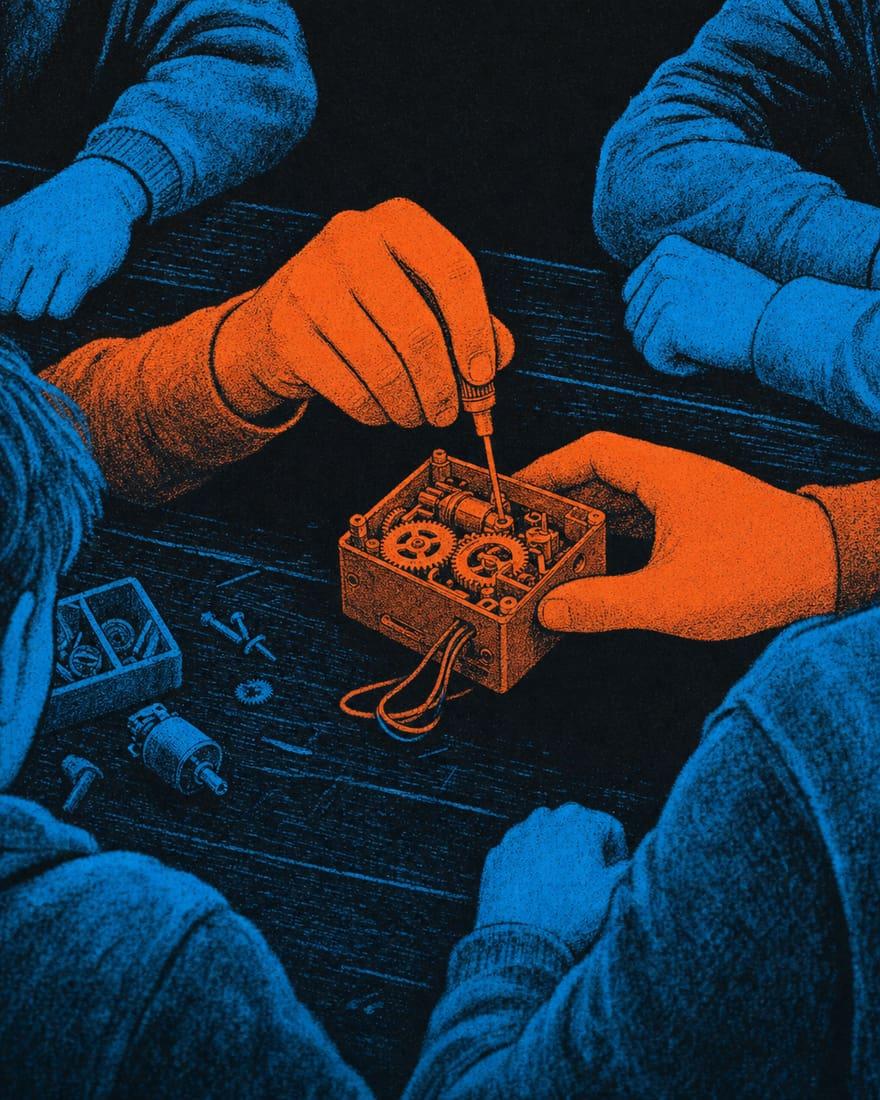
Pl. 2 — One pair of hands at the benchIllustration
I do
The groundwork I took on myself, so the team had something solid to pick up.
WroteThe ChatGPT-to-Claude migration playbook, with its 30/60/90-day rollout
WroteThe skill-creation playbook
ArchitectedThe MCP retrieval server over the agency’s documents
ProducedThe ranked map of ten AI opportunities, for executive review
We do
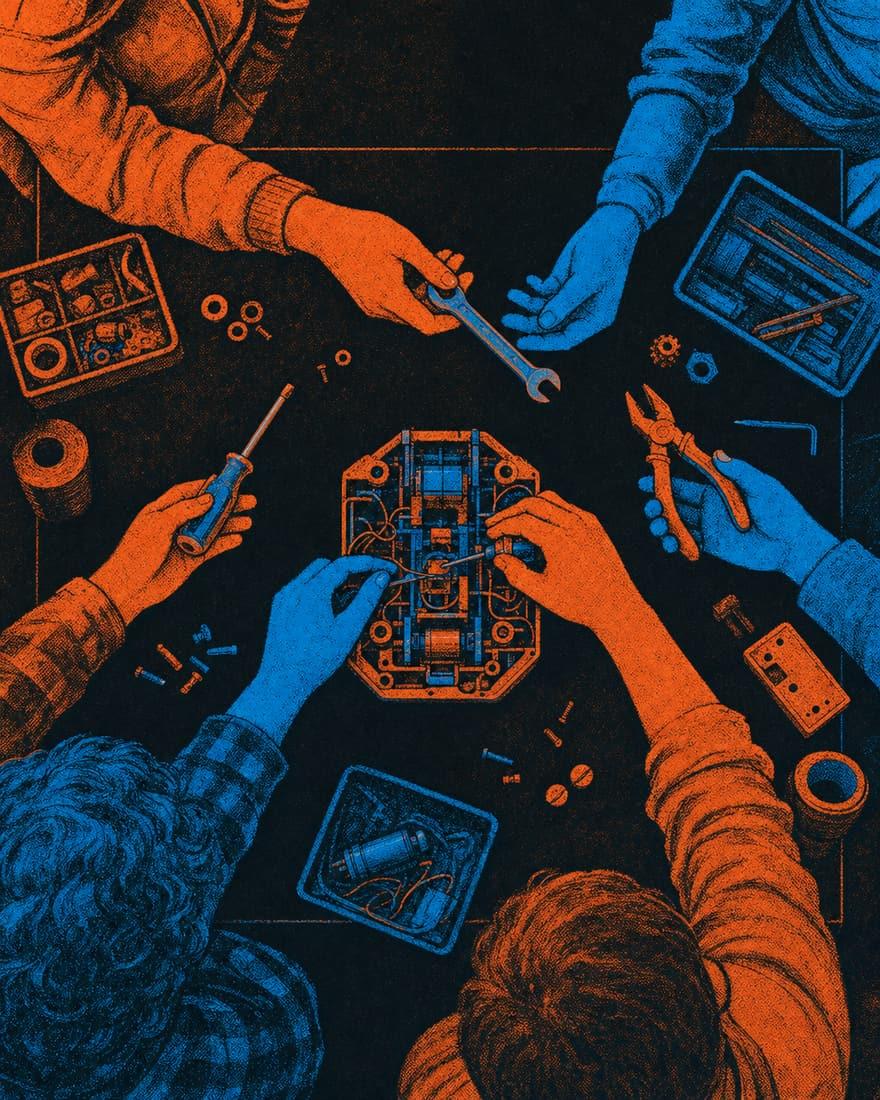
The tools the teams use every day, built with them rather than for them.
Helped buildClaude Skills and Slack bots for every department, connected to Asana, Google Workspace and Figma
HelpedMigrate the organization to Claude
RanCompany-wide AI office hours
Pl. 3 — Tools passing between handsIllustration
You do
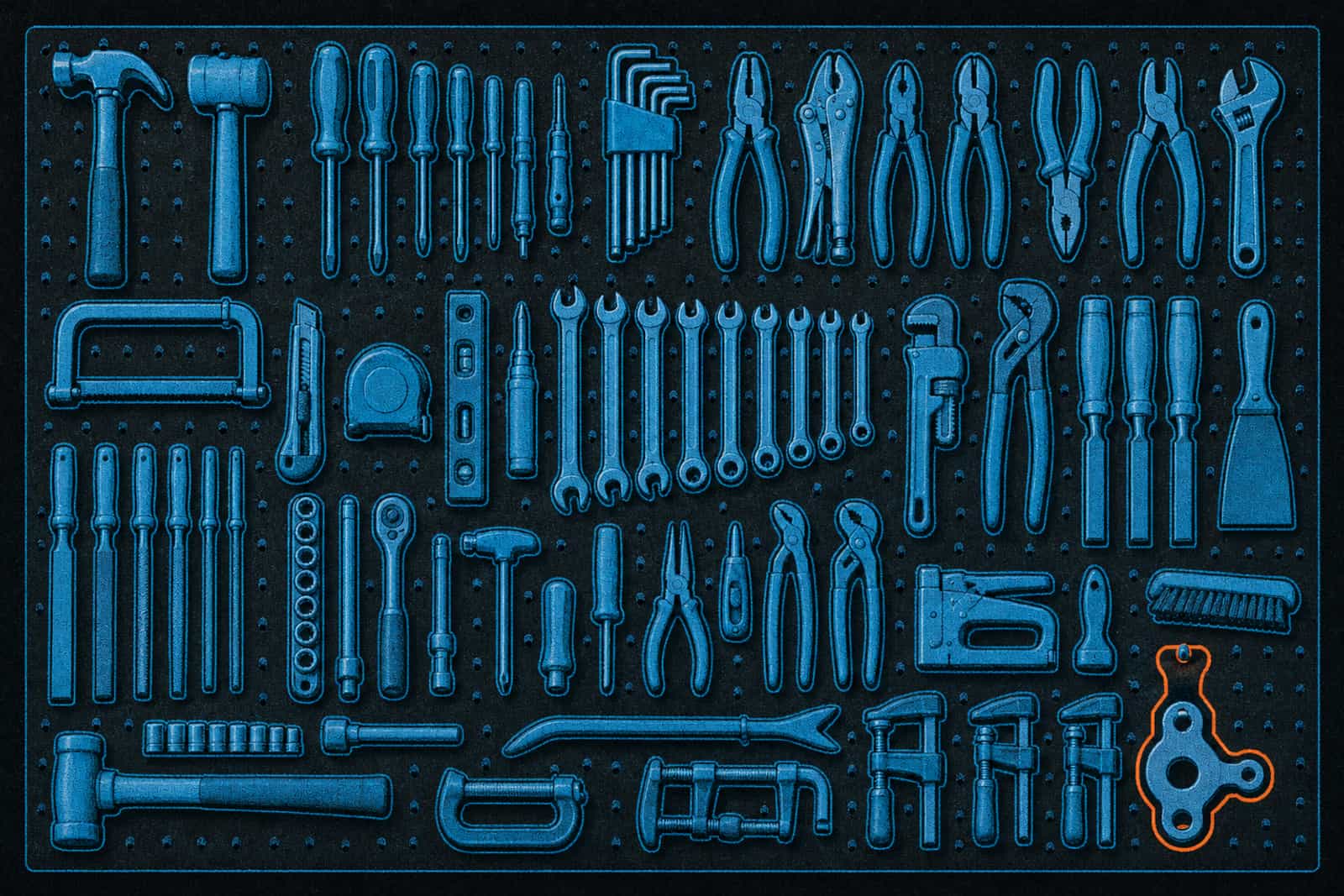
Teams across the agency building and maintaining their own AI-powered tools, under rules they can run without me.
TheirsBuilding and maintaining their own AI-powered tools
TheirsBuilding and governing Claude Skills, with the skill-creation playbook
TheirsStill developing new ways to implement AI, months later
Pl. 4 — One person at the bench, the stool emptyIllustration
04 /What the teams got
Five pieces, each one theirs to keep.
ChatGPT-to-Claude migration playbook
Wrote
The move off ChatGPT: a Drive knowledge base, Cowork as the daily workspace, a Custom GPT-to-Skills migration path, the tradeoffs stated, and a 30/60/90-day rollout.
Skill-creation playbook
Wrote
Lets non-engineers build and govern Claude Skills, with reusable templates and ownership, versioning, quarterly-audit and sunset rules.
Used by non-engineers.
Claude Skills and Slack bots
Helped build
For every department’s workflows, connected to Asana, Google Workspace and Figma.
Used by marketing, client relations, data and performance, and creative.
Marketing
Client relations
Shared document index
Data and performance
Creative
Illustration: four departments, one document index
MCP retrieval server
Architected
Retrieval over the agency’s documents on Postgres with pgvector, with agentic retrieval and LLM reranking, access controls, and continuous ingestion of new documents and messages.
Ranked map of ten AI opportunities
Produced
Scored on ROI, build effort, and adoption and vendor risk, for executive review. It re-ranked the agency’s priorities, added two themes and laid out a 30/60/90-day plan.
Used by executives, for review.
Contents
Migration playbook
A Drive knowledge base
Cowork as the daily workspace
The Custom GPT-to-Skills migration path
Stated tradeoffs
The 30/60/90-day rollout
30
60
90
Fig. 1 — Migration playbook: contentsIllustration from the recorded contents. Not the client’s document.
The rules
Skill-creation playbook
So non-engineers can build and govern Claude Skills.
Ownership
Versioning
Quarterly audit
Sunset
Reusable templates
Fig. 2 — Skill-creation playbook: the rulesIllustration from the recorded contents. Not the client’s document.
05 /Bringing everyone along
Most blockers were documentation and onboarding gaps, rather than tooling.
Two company-wide AI office hours, about 20 attendees each, turned into a five-theme gap analysis.
An average of 70% adoption within each department, measured by weekly activity with the Claude Skills, Slack bots and automations.
“Rasheed helped put us on a path to continue building independently, and months later we are still developing new ways to implement AI.”
Jack GilbertDirector of Performance & Analytics, Code3